The Sales Method That Changes How You Ask Questions (SPIN)

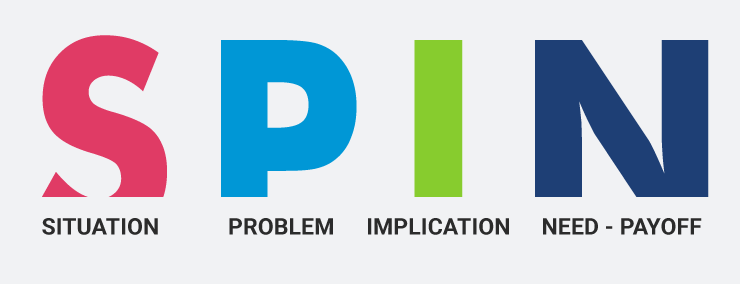
SPIN Selling is a B2B sales methodology developed by Neil Rackham, based on research across more than 35,000 sales calls. It identifies four question types — Situation, Problem, Implication, and Need-Payoff — that guide buyers toward articulating their own need for change.
Unlike traditional sales techniques that rely on pitching features early, SPIN Selling works by building urgency through conversation. The rep listens more than they talk, and the buyer often sells themselves.
TL;DR
• SPIN stands for Situation, Problem, Implication, Need-Payoff — four question types used in sequence
• Developed by Neil Rackham after studying 35,000+ sales calls across 23 countries
• Designed for complex, high-value B2B deals with long sales cycles
• Implication questions are the most powerful — they build urgency by exploring the cost of inaction
• Need-Payoff questions make the buyer articulate the value of solving the problem themselves
What Is SPIN Selling?
SPIN Selling is a research-backed sales framework published by Neil Rackham in 1988. It emerged from one of the largest studies ever conducted on sales effectiveness, commissioned by Huthwaite International. The research analyzed what top-performing salespeople actually did differently in complex deals — and the answer wasn't closing techniques. It was the quality of their questions.
The acronym SPIN stands for the four question categories Rackham identified as most effective: Situation, Problem, Implication, and Need-Payoff. Used in sequence, these questions help a buyer move from vague dissatisfaction to a clear desire for change — without the seller pushing them there.
SPIN Selling is particularly effective in B2B environments where deals involve multiple stakeholders, long evaluation cycles, and significant organizational change. It's the opposite of transactional selling: you're not closing fast, you're building conviction.
What Are Situation Questions?
Situation questions establish the current state of the buyer's world. They are fact-finding in nature: what tools is the prospect using, how is their team structured, what does their current process look like?
Rackham's research found that top performers use situation questions sparingly. Too many and the buyer loses patience — they feel like they're filling out a form rather than having a conversation. The goal is to gather just enough context to ask smarter questions later.
Examples include: "How many people are involved in reviewing vendor responses?" or "What tools does your team currently use to manage proposals?"
What Are Problem Questions?
Problem questions surface dissatisfaction. They invite the buyer to name what isn't working, where the friction is, and what's taking too long. The goal isn't to manufacture pain — it's to surface what's already there but hasn't been fully articulated.
Buyers often know something is wrong but haven't quantified it or made it a priority. A well-placed problem question brings that latent frustration into focus.
Examples: "Where do bottlenecks tend to appear in your current process?" or "How much time does your team spend on responses that don't convert?"
What Are Implication Questions?
Implication questions are where SPIN Selling gets its real power. They don't ask about the problem — they ask about the consequences of leaving the problem unsolved. This is what builds urgency.
"If this process is taking an extra three hours per deal, how does that affect capacity at quarter-end?" or "When responses go out late, what's the impact on win rate?"
Rackham's data showed that implication questions were the single biggest differentiator between top and average performers in large deals. Average sellers identify the problem and immediately pitch. Top sellers pause, explore the cost of inaction, and let the buyer feel the weight of the problem before any solution is mentioned.
What Are Need-Payoff Questions?
Need-Payoff questions shift the conversation toward value — but in the buyer's own words. Instead of saying "Our product saves you 10 hours a week," you ask: "How valuable would it be if your team could cut that time in half?"
When buyers articulate the value themselves, they own it. This dramatically increases commitment compared to being told the same thing by a salesperson. Need-Payoff questions are also highly effective for multi-stakeholder deals: the buyer's own words become the internal justification they use when building the case to others.
Examples: "If you could get that visibility into your pipeline in real time, how would that change how you run your Monday reviews?"
Why Does SPIN Work in Complex B2B Sales?
SPIN Selling was designed for deals where the stakes are high, the buyer has multiple concerns, and the decision takes weeks or months. In these environments, traditional closing techniques — urgency manufacturing, feature lists, aggressive follow-up — tend to create resistance rather than momentum.
Complex buyers don't want to be sold to. They want to reach their own conclusion that change is necessary. SPIN accelerates that process by structuring the conversation around their reality, their pain, and their language. The pre-sales process is where SPIN has its greatest impact — it shapes qualification, discovery, and the framing of any written response that follows, including RFPs.
How Is SPIN Selling Different from Other Sales Methodologies?
Most sales methodologies focus on the seller's process: stages, objection handling, closing sequences. SPIN focuses on the buyer's psychology — specifically, how people move from satisfied with the status quo to motivated to change.
Compared to solution selling, SPIN is more question-driven and less prescriptive. Compared to Challenger Sale, SPIN relies on drawing out the buyer's pain rather than teaching them something new. The two approaches complement each other: SPIN is strongest in discovery; Challenger is strongest in reframing the problem.
A bid manager or proposal professional applying SPIN won't necessarily use it in a live pitch — they'll use it during discovery calls to understand what the buyer actually cares about before writing a single word.
Common Mistakes When Using SPIN Selling
The most frequent mistake is treating SPIN as a script. Salespeople ask Situation questions, then Problem questions, then Implication questions, in rigid sequence, regardless of where the conversation goes. This feels mechanical and the buyer notices.
SPIN is a thinking framework, not a checklist. A skilled practitioner moves fluidly between question types, following the buyer's responses. If a buyer immediately names a deep problem, you don't need to spend 10 minutes establishing situation. You move to implications.
Another common error is skipping Implication questions entirely — going from Problem straight to Need-Payoff. This is the most expensive shortcut in complex sales. Urgency hasn't been built, so the buyer's answer to "How valuable would this be?" is often a polite shrug.
How to Apply SPIN Selling in a Real Conversation
A practical SPIN conversation doesn't have to be long. Four questions, used well, can do more work than a 40-slide deck.
Situation: "How are you currently handling the vendor response process?"
Problem: "Where does that tend to break down — especially under time pressure?"
Implication: "When responses go out incomplete or late, what's the downstream effect on win rate and team morale?"
Need-Payoff: "If you could eliminate that bottleneck entirely, what would that free up for the team?"
The buyer has now described their problem, felt its weight, and articulated the value of solving it. The seller hasn't pitched anything yet.
Is SPIN Selling Still Relevant Today?
SPIN Selling was published in 1988, but its core insight holds: buyers in complex deals don't change because of features — they change because they feel the cost of staying the same. That dynamic hasn't changed with digital selling, remote demos, or AI-powered outreach.
What has changed is buyer sophistication. Modern B2B buyers do more research before talking to a seller than ever before. This makes Situation questions easier to skip (much is publicly available) and Implication questions more important, because the real discovery work happens at the consequence level, not the fact-finding level.
SPIN principles also translate well to written sales communication — including RFP cover letters and executive summaries, where the goal is to demonstrate you understand the buyer's problem deeply before presenting your solution.
How Does SPIN Selling Connect to Proposal and RFP Work?
In RFP and RFI contexts, SPIN principles show up in how teams approach discovery before writing. The best responses don't just answer the stated requirements — they reflect an understanding of the buyer's underlying problem and the implications of getting it wrong. That understanding only comes from asking SPIN-style questions in pre-submission conversations, demos, or site visits.
A procurement manager reading two responses of equal technical merit will gravitate toward the one that demonstrates deeper understanding of their actual situation — which is exactly what SPIN Selling trains teams to uncover.
For teams managing high volumes of complex sales interactions, Steerlab.ai automates the operational burden of RFP and questionnaire responses, freeing up salespeople to focus on the discovery conversations where SPIN Selling creates the most value.
Frequently Asked Questions
What does SPIN stand for in sales?
SPIN stands for Situation, Problem, Implication, and Need-Payoff. These are four types of questions used in sequence during complex B2B sales conversations. Each type serves a different purpose: Situation establishes context, Problem surfaces pain, Implication builds urgency, and Need-Payoff helps the buyer articulate the value of solving the problem in their own words.
Who created SPIN Selling?
SPIN Selling was created by Neil Rackham, a British researcher and consultant, and published in 1988. It emerged from a 12-year research project conducted by Huthwaite International, analyzing over 35,000 sales calls across 23 countries. The methodology was originally developed to help companies like Xerox and IBM improve performance in large, complex deals.
Is SPIN Selling effective for all types of sales?
SPIN Selling is most effective in complex, high-value B2B sales with long cycles and multiple decision-makers. It's less suited to transactional or one-call-close environments, where simpler techniques work better. Rackham himself noted that the behaviors that drive success in large deals often differ significantly from those that work in smaller, faster transactions.
How is SPIN Selling different from the Challenger Sale?
SPIN Selling works by drawing out the buyer's pain through questions and helping them feel urgency around their own problems. The Challenger Sale works by teaching the buyer something they didn't know — reframing the problem in a way that makes the seller's solution the obvious answer. Both are question-driven, but SPIN is primarily discovery-oriented while Challenger is insight-oriented. Many experienced reps use both.
Is there software that helps sales teams apply SPIN Selling principles at scale?
SPIN Selling happens in conversations, so the methodology itself doesn't require software. But the downstream outputs of good discovery — compelling proposals, RFP responses that reflect real buyer pain — are where tools make a difference. Steerlab.ai helps sales and proposal teams turn discovery insights into high-quality responses to RFPs, RFIs, and security questionnaires, significantly reducing the time between discovery and submission.
How long does it take to learn SPIN Selling?
The concepts behind SPIN Selling can be understood in a few hours. Applying them well in live conversations takes practice — most sales trainers suggest 20 to 30 observed and coached calls before the framework becomes natural. The hardest part for most salespeople is resisting the urge to pitch before urgency has been built through Implication questions.