7 Best Security Questionnaire Automation Software in 2026
.png)
.png)
Introduction
The security questionnaire and vendor risk assessment process has become one of the biggest bottlenecks in modern B2B sales and procurement workflows. In 2026, organizations face an explosion of vendor security assessments, due diligence questionnaires (DDQs), CAIQ forms, and compliance validation requests — all requiring fast, accurate, and auditable responses. Automating security questionnaires can reduce operational costs by up to 30%, making it a critical lever for efficiency and cost savings.
Historically, security teams handled questionnaires manually using spreadsheets, email chains, and static documentation. Today, AI-powered automation platforms are transforming this process by enabling organizations to centralize security knowledge, auto-generate responses, and maintain compliance across evolving frameworks. This shift not only streamlines workflows but also significantly improves accuracy and consistency in responses, thanks to centralized content libraries and AI-driven processes that reduce errors and ensure uniformity.
As third-party risk management (TPRM) and trust transparency become mandatory buying criteria, choosing the right security questionnaire automation software is now a strategic decision impacting revenue velocity, vendor onboarding speed, and security posture.
Industry analysts from Gartner note that AI-driven vendor risk automation platforms are rapidly becoming essential to reduce assessment turnaround time while improving accuracy and compliance consistency. Automated responses help organizations handle security questionnaires faster and improve response time, making the process more efficient and less stressful for security and compliance teams.
Organizations typically align questionnaire responses with recognized frameworks such as ISO/IEC 27001 and SOC 2, both of which heavily influence security review requirements across SaaS, financial services, and healthcare sectors. As the complexity and volume of security questionnaires increase, maintaining accuracy in responses is crucial to ensure reliability and build trust with clients.
In this guide, we evaluate the top security questionnaire automation platforms for 2026, analyzing their capabilities, pricing approaches, and ideal use cases.
Benefits of Automating Security Questionnaires
Automating security questionnaires delivers transformative benefits for organizations aiming to streamline their security reviews and strengthen their overall security posture. By adopting advanced security questionnaire automation software, companies can dramatically reduce the manual effort required to complete questionnaires, freeing up security teams to focus on more strategic initiatives.
One of the most significant advantages is the ability to generate accurate responses quickly and consistently. Leveraging AI-powered responses and a centralized knowledge base, security questionnaire software ensures that questionnaire answers are always up-to-date and aligned with the latest compliance documentation. This reduces the risk of inconsistent responses and helps maintain high standards of security and compliance across every assessment.
Questionnaire automation also addresses the challenge of questionnaire burnout, which often plagues security, sales, and compliance teams faced with a high volume of repetitive security questionnaires. By automating the process, organizations can handle large numbers of requests efficiently, ensuring that every questionnaire is completed with precise answers and minimal delay. This not only accelerates response times but also improves the quality and accuracy of each submission.
Collaboration is another key benefit of security questionnaire automation tools. With a centralized platform, multiple stakeholders—including sales teams, compliance teams, and subject matter experts—can work together seamlessly. This collaborative approach ensures that all questionnaire answers are reviewed, approved, and backed by the right expertise, reducing bottlenecks and enhancing the overall review process.
The best security questionnaire software also offers detailed analytics and instant AI answers, empowering organizations to track progress, identify trends, and make data-driven decisions. Features like a centralized library of approved answers and intelligent answer automation further reduce the risk of errors and support ongoing improvements in security practices.
Ultimately, automating security questionnaires enables organizations to maintain a robust security and compliance posture, reduce costs, and improve operational efficiency. By choosing a solution with key features such as AI-powered responses, a centralized knowledge base, and advanced analytics, companies can confidently manage their security questionnaire process, deliver accurate answers, and support broader compliance and vendor risk management programs.
Quick Comparison Table
1. Steerlab – Best AI-Native Security Questionnaire Automation Platform
.png)
G2 Rating: ⭐ 5/5
Steerlab is an AI-first response automation platform designed to help security, compliance, and PreSales teams automate security questionnaires, DDQs, and vendor risk assessments with minimal manual effort. Steerlab is particularly effective at automating questionnaire responses for complex security questionnaires, reducing manual effort and streamlining workflows for enterprise clients.
Founded in 2023, Steerlab focuses on combining advanced generative AI, knowledge orchestration, and strategic response intelligence into a single collaborative workspace. Steerlab leverages company wikis and other internal documentation as part of its knowledge base to provide comprehensive questionnaire assistance, ensuring accurate and consistent responses. The platform is particularly strong for B2B SaaS companies managing large volumes of customer security reviews.
Key Features
Advanced AI Questionnaire Automation
Steerlab automates up to 90%+ of questionnaire responses using citation-backed AI generation, with AI-generated responses that draw from past questionnaires and internal documentation. The system supports spreadsheet-based assessments, trust portal questionnaires, and complex compliance narratives. Its AI shredding engine automatically extracts requirements and maps them to compliance frameworks.
Steerlab provides confidence scores for each AI-generated response, allowing users to assess reliability and review answer sources.
Self-Maintaining Security Knowledge Graph
Instead of relying on static answer libraries, Steerlab continuously syncs security documentation, policies, architecture diagrams, and product documentation, with integration to document management systems to avoid data silos and enhance audit readiness, maintaining an always-current response repository.
Steerlab's centralized content libraries store security policies, certifications (such as ISO 27001 and SOC 2), and previous answers in one place to maintain consistency.
Strategic Response Intelligence
Steerlab introduces AI decision agents that help teams:
- Evaluate response effort vs. deal value
- Detect biased or competitor-driven questionnaires
- Identify compliance or product capability gaps
- Predict success probability
Collaboration & Workflow Automation
Teams assign questions, track deadlines, and collaborate across security, engineering, and sales stakeholders in real time, supported by Steerlab's structured approval workflows that involve multiple departments such as IT, legal, and compliance. Responses are automatically routed to relevant experts for review and to approve responses, ensuring transparency and effective progress tracking. Human oversight is built into the process, allowing subject matter experts to review and approve responses as needed, so automation augments—rather than replaces—critical human judgment. Establishing clear roles and approval workflows ensures each stakeholder knows when to review, verify, and approve answers. Steerlab also allows for easy edits and human oversight while automating the bulk of the work.
Workflow Integrations
Steerlab integrates with documentation, CRM, and collaboration tools while also supporting browser-based vendor portals, and connects seamlessly with existing tools such as Salesforce, Slack, or Jira to streamline workflows and reduce manual effort.
Enterprise-Grade Security
Steerlab supports compliance with SOC 2 and ISO/IEC 27001 while enforcing strong identity and data isolation controls.
Ideal For
- SaaS vendors responding to customer security reviews, client security reviews
- Security teams managing DDQ volume at scale
- PreSales teams accelerating enterprise deal cycles
2. Whistic – Vendor Risk Exchange Leader
G2 Rating: ⭐ 4.6/5
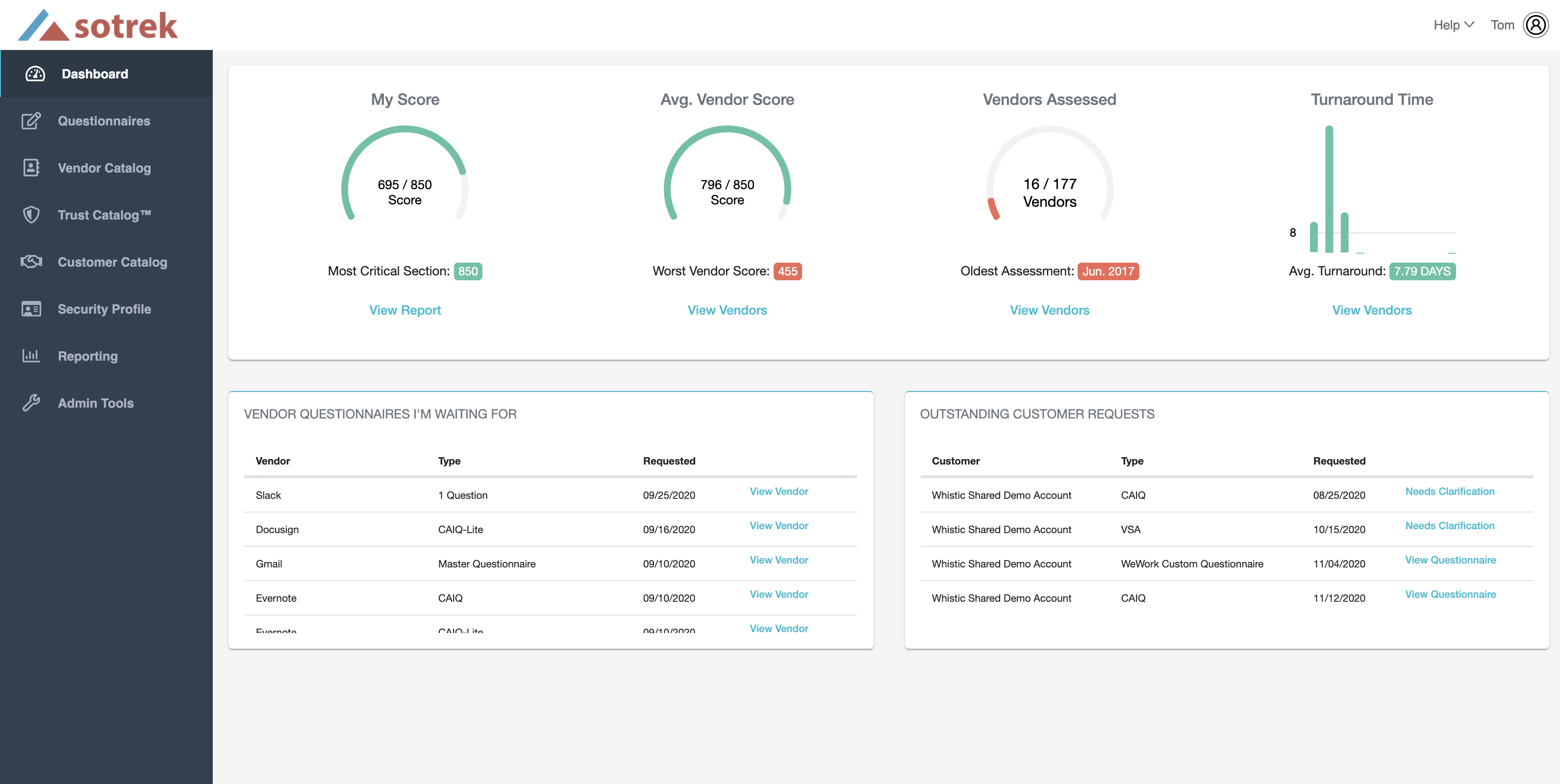
Whistic is one of the most established platforms dedicated specifically to vendor risk assessments and third-party security reviews. The platform is widely known for its vendor trust exchange marketplace.
Key Features
Vendor Security Exchange Network
Whistic enables organizations to share completed security assessments through a shared trust exchange, reducing repetitive questionnaires across customers.
Assessment Automation
The platform supports standardized questionnaire formats such as SIG and CAIQ and provides automated workflow routing for internal review.
Risk Intelligence
Built-in analytics help procurement and security teams evaluate vendor risk exposure and compliance maturity.
Pricing
Custom enterprise pricing based on vendor and assessment volume.
Ideal For
Organizations focused heavily on vendor risk management and third-party security transparency.
Pros
✅ Strong vendor risk exchange ecosystem
✅ Standardized assessment support
✅ Strong procurement alignment
Cons
❌ Less advanced AI response automation
❌ Requires vendor ecosystem participation for maximum value
3. Conveyor – Security Review Automation for Revenue Teams
G2 Rating: ⭐ 4.6/5
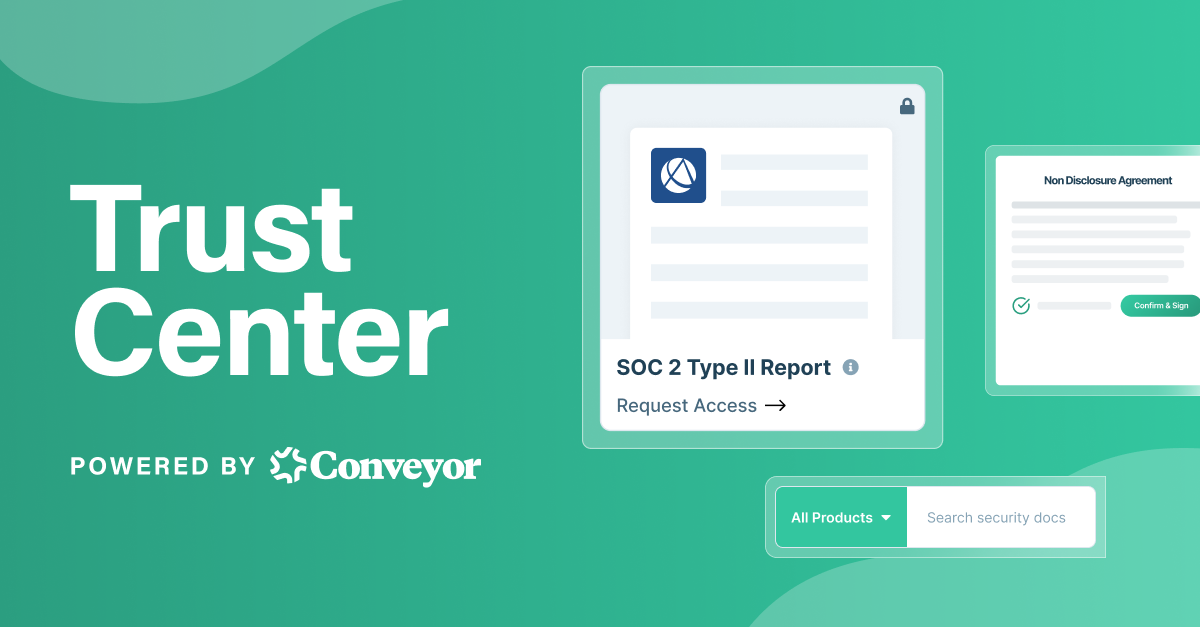
Conveyor focuses on accelerating customer security reviews during sales cycles by combining AI automation with trust center infrastructure.
Key Features
Automated Questionnaire Completion
Conveyor uses AI to auto-fill security questionnaires using company security documentation and prior responses, leveraging AI-generated responses and automated responses that are tailored to each questionnaire's requirements.
Trust Center Integration
The platform automatically surfaces security documents, policies, and certifications to customers, reducing inbound questionnaire requests.
Buyer-Facing Collaboration
Sales teams can provide real-time security transparency during deal cycles.
Pricing
Custom SaaS pricing.
Ideal For
Revenue and PreSales teams seeking to accelerate enterprise sales cycles.
Pros
✅ Strong sales alignment
✅ Modern trust center experience
✅ High automation capability
Cons
❌ Less suited for internal vendor risk workflows
❌ Smaller compliance management feature set
4. SafeBase – Trust Center and Transparency Platform
G2 Rating: ⭐ 4.7/5
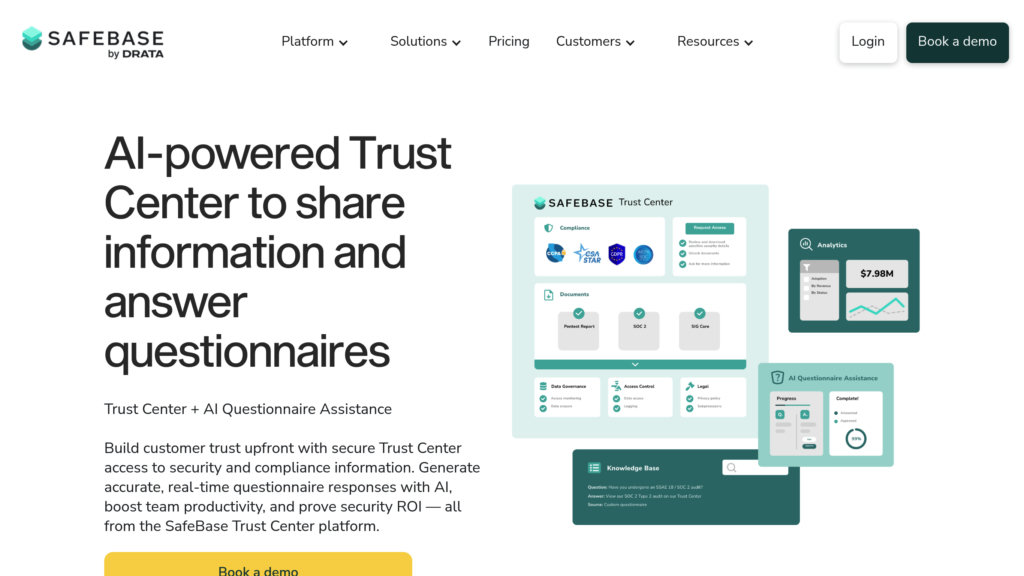
SafeBase specializes in helping companies proactively share security posture information through interactive trust centers.
Key Features
Self-Serve Trust Portals
SafeBase allows customers and prospects to access compliance documents, certifications, and policies without submitting questionnaires.
Questionnaire Auto-Response
The platform provides automation to respond to common security requests using centralized documentation, offering questionnaire assistance by generating evidence-backed responses. Answers given in automated systems should focus on direct, factual responses backed by evidence rather than detailed narratives.
Sales Workflow Integration
SafeBase integrates deeply into GTM workflows to reduce security friction during deal closing.
Pricing
Custom enterprise SaaS pricing.
Ideal For
Fast-growing SaaS companies prioritizing buyer transparency.
Pros
✅ Excellent buyer experience
✅ Strong trust center UI
✅ Reduces inbound questionnaire volume
Cons
❌ Limited vendor risk management capabilities
❌ Less AI-native automation depth
5. Vanta – Compliance-First Security Automation

G2 Rating: ⭐ 4.6/5
Vanta is best known as a compliance automation platform that helps companies achieve certifications such as SOC 2 and ISO 27001, while also supporting security questionnaire workflows.
Key Features
- Continuous compliance monitoring
- Automated evidence collection
- Questionnaire response support using compliance documentation
- Auditor workflow automation
Ideal For
Startups and mid-market SaaS companies building compliance foundations.
Pros
✅ Strong compliance automation
✅ Easy onboarding
✅ Popular with startups
Cons
❌ Questionnaire automation not primary focus
❌ Limited response intelligence features
6. Drata – Continuous Compliance and Security Evidence Automation
G2 Rating: ⭐ 4.8/5
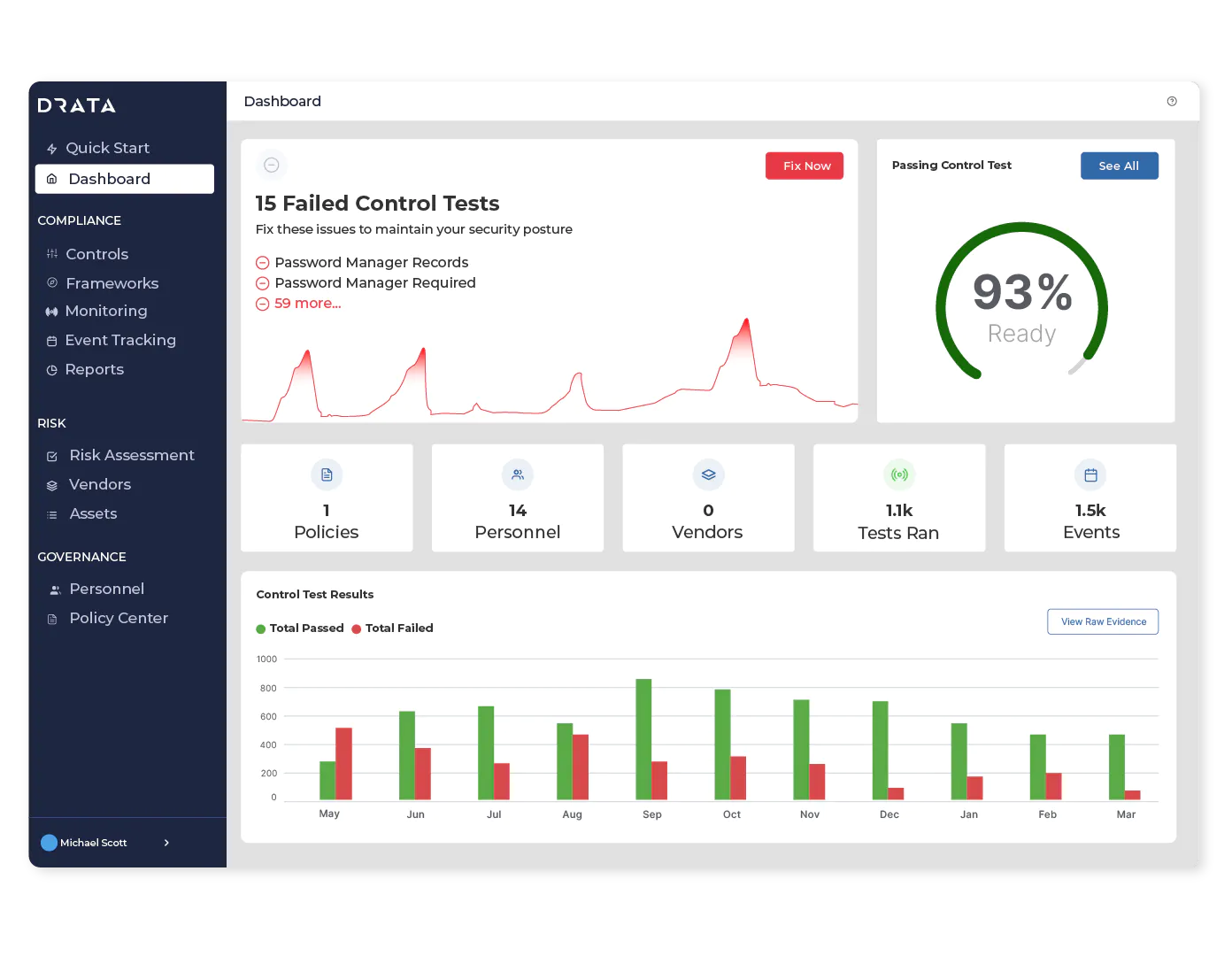
Drata provides continuous compliance monitoring and supports vendor and customer security review workflows through automated evidence gathering.
Key Features
- Real-time compliance monitoring
- Automated security control mapping
- Evidence-based questionnaire support
- Audit preparation automation
Ideal For
Organizations prioritizing continuous compliance and audit readiness.
Pros
✅ Strong audit automation
✅ Robust compliance mapping
✅ Scalable for fast-growing companies
Cons
❌ Less focused on AI-driven questionnaire response
❌ Limited collaboration workflow depth
7. Hyperproof – Enterprise Governance and TPRM Platform
G2 Rating: ⭐ 4.5/5
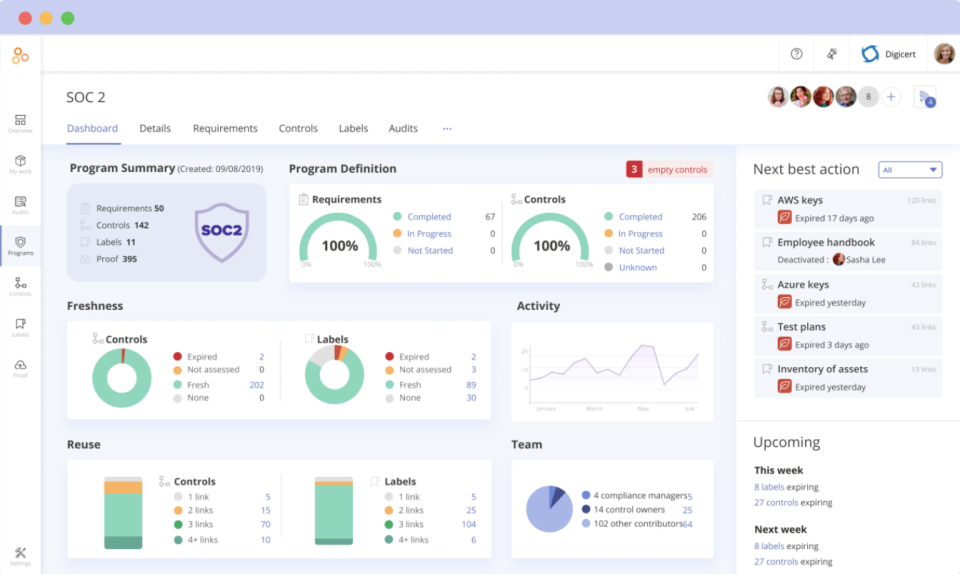
Hyperproof is an enterprise-grade governance, risk, and compliance (GRC) platform with strong third-party risk and vendor questionnaire management capabilities.
Key Features
Unified Risk and Compliance Management
Hyperproof centralizes risk registers, vendor assessments, and compliance frameworks into a single governance platform.
Vendor Risk Workflow Automation
The platform supports end-to-end third-party risk lifecycle management including onboarding, risk scoring, and reassessments.
Evidence Mapping
Hyperproof automatically maps questionnaire responses to compliance controls.
Pricing
Enterprise custom pricing.G
Ideal For
Large organizations requiring centralized governance and risk orchestration.2
Pros
✅ Deep TPRM workflows
✅ Strong compliance mapping
✅ Enterprise scalability
Cons
❌ Heavier implementation
❌ Less GTM and PreSales alignment
How to Choose the Right Security Questionnaire Software
Selecting the right platform depends on your organization’s maturity, assessment volume, and strategic goals.
1. Response Volume and Complexity
Organizations handling large volumes of customer security reviews benefit from AI-native automation platforms like Steerlab or Conveyor, as well as specialized security questionnaire tools—essential solutions for managing high response volume and complexity efficiently.
2. Vendor Risk Management Requirements
Companies prioritizing third-party vendor oversight and comprehensive vendor risk management should consider platforms like Whistic or Hyperproof that offer deep risk workflows and vendor assessment automation.
3. Compliance Automation Needs
Organizations building foundational and broader compliance programs often adopt Vanta or Drata, which provide continuous compliance monitoring, automated evidence collection, and integration with compliance platforms to maintain up-to-date security posture.
4. Buyer Transparency Strategy
Companies prioritizing proactive trust building and customer data security often deploy SafeBase or Conveyor, leveraging trust centers and self-serve portals to enhance buyer transparency and reduce inbound questionnaire volume.
5. AI Automation Priority
Organizations seeking maximum response efficiency and tailored responses should evaluate platforms delivering 85%+ AI-powered automation, where Steerlab currently leads with its advanced AI agents and strategic response intelligence.
Security Questionnaire Automation Market Trends for 2026
AI-Driven Response Agents
Platforms are evolving from static answer libraries toward autonomous AI agents capable of analyzing, drafting, and validating security questionnaire responses with human oversight, ensuring accuracy and compliance.
Trust Center Adoption
Buyer expectations now demand self-serve security transparency, accelerating adoption of trust portals that provide real-time access to compliance documentation and security assessments.
Continuous Compliance Integration
Security questionnaire automation is increasingly tied to real-time compliance evidence generation and integration with compliance platforms, enabling organizations to maintain audit-ready posture effortlessly.
Strategic Response Intelligence
New platforms are embedding analytics and confidence scores to help organizations prioritize assessments, optimize resource allocation, and deliver precise, evidence-backed questionnaire answers.
FAQ
What is security questionnaire automation?
Security questionnaire automation refers to the use of AI-powered software tools to streamline and accelerate the process of responding to vendor or client security assessments. These tools automate repetitive tasks by drawing from centralized knowledge bases and approved answers, ensuring faster, more accurate, and consistent questionnaire responses.
How does security questionnaire automation benefit organizations?
By automating security questionnaires, organizations can reduce manual effort, minimize errors, improve response accuracy, and accelerate sales and procurement cycles. Automation also enhances collaboration among security, compliance, and sales teams, helping maintain a strong security posture and compliance with evolving regulations.
Which types of organizations benefit most from security questionnaire automation?
Companies that regularly respond to large volumes of complex security questionnaires, such as SaaS vendors, financial services, healthcare providers, and enterprises with rigorous compliance requirements, benefit most. Automation helps these organizations handle questionnaire volume efficiently without increasing headcount.
How do AI-powered security questionnaire tools work?
Tools like Steerlab use artificial intelligence to analyze incoming questions, match them to relevant responses stored in a centralized content library, and generate draft answers. AI systems often provide confidence scores and citations, enabling subject matter experts to review and approve responses before submission.
Can security questionnaire automation software integrate with existing systems?
Yes, most modern security questionnaire automation platforms integrate with CRM systems, document management tools, collaboration platforms, and compliance software. This integration streamlines workflows, reduces manual data entry, and ensures responses remain aligned with the latest security documentation.
Is human oversight still necessary with automated questionnaire responses?
Absolutely. While automation handles the bulk of repetitive tasks, human review and approval remain critical to ensure accuracy, contextual relevance, and compliance. Many platforms include structured approval workflows to facilitate collaboration and maintain quality control.
What are common challenges when implementing security questionnaire automation?
Challenges include aligning multiple stakeholders, maintaining an up-to-date knowledge base, integrating with existing tools, and balancing automation with human oversight. Pilot programs, clear role definitions, and ongoing training help overcome these obstacles.
How much time can organizations save by automating security questionnaires?
Organizations report up to an 87% reduction in questionnaire completion time. Automation transforms what once took weeks into hours, freeing teams to focus on strategic initiatives and accelerating deal closures.
Are there standardized frameworks supported by security questionnaire automation tools?
Yes, many tools support frameworks like CAIQ (Consensus Assessments Initiative Questionnaire) and SIG (Standardized Information Gathering), helping organizations align responses with widely recognized compliance standards.
How do I choose the right security questionnaire automation software?
Consider factors such as your questionnaire volume and complexity, integration needs, desired level of AI automation, collaboration features, and support resources. Evaluating platforms through demos and pilot programs can help identify the best fit for your organization’s specific requirements. For organizations looking for a solution that combines advanced AI-driven automation with strategic response intelligence and collaborative workflows, platforms like Steerlab offer a thoughtful approach to streamlining the security questionnaire process without overwhelming teams.
Conclusion
The security questionnaire automation market has matured rapidly as organizations recognize the importance of fast, accurate, and scalable vendor risk and customer security response processes.
While each platform serves different organizational priorities, Steerlab stands out for teams seeking deep AI automation combined with strategic response intelligence and collaborative workflows.
Organizations focused on vendor risk exchange may benefit from Whistic, while Conveyor and SafeBase excel in customer-facing trust automation. Vanta and Drata provide strong compliance foundations, and Hyperproof delivers enterprise governance orchestration.
Ultimately, the best solution depends on whether your priority is automation speed, compliance maturity, vendor risk visibility, or sales acceleration.